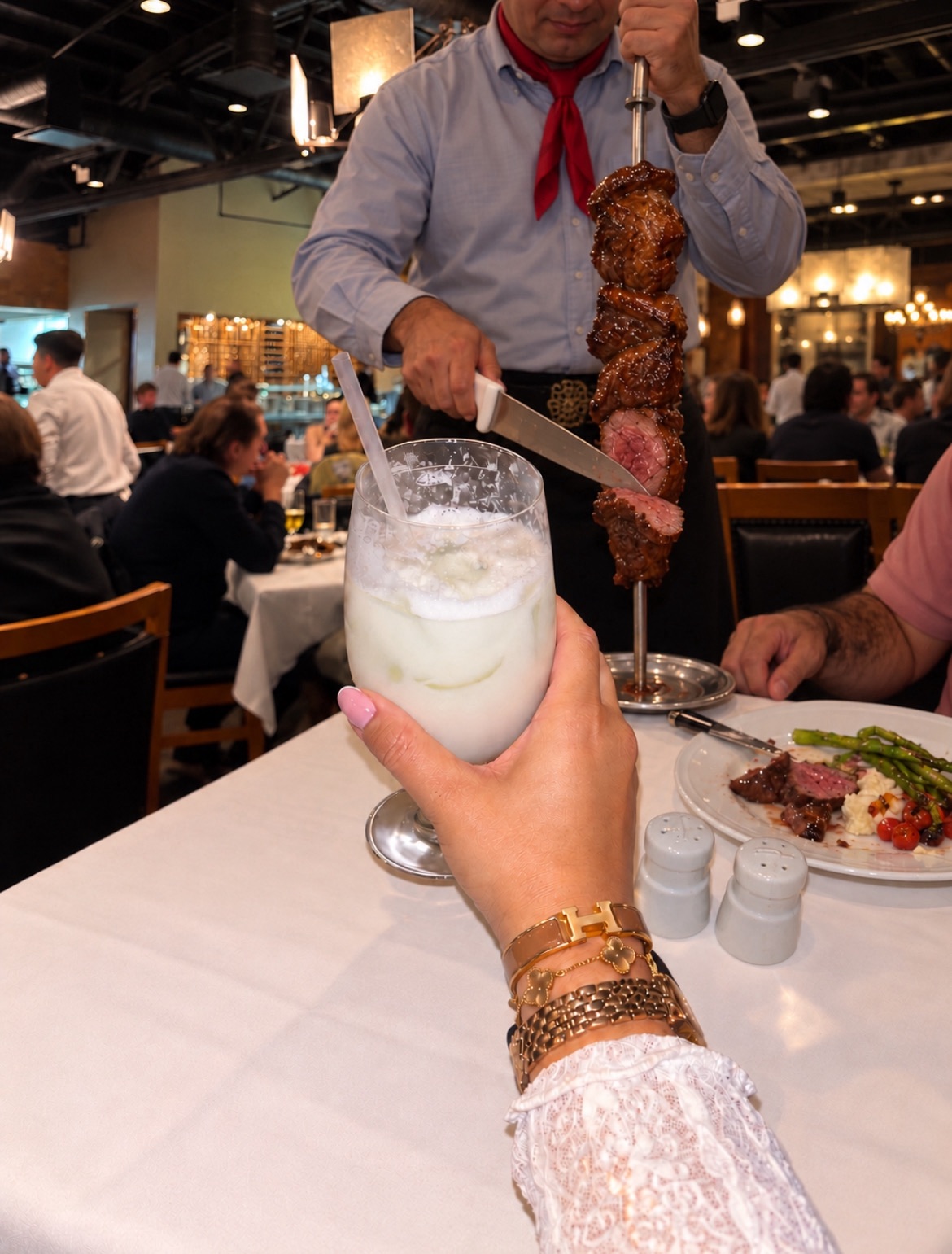
Why Brazilian lemonade is CARRA’s drink-of-the-year pick for 2027—and the glass that held our attention at Fogo de Chão in Chicago.
The first impression is the contradiction. Bright lime. A soft, milky finish. Something tart enough to wake up the table and sweet enough to stay with it.
Brazilian lemonade has the kind of range hospitality keeps trying to manufacture. It works at lunch, carries into dinner, and arrives without requiring anyone to explain whether they are drinking tonight. There is already enough happening in the glass.
CARRA is calling it early: Brazilian lemonade is our drink of the year for 2027.
Our forecast begins with a dinner at Fogo de Chão in Chicago. The meal had its own momentum. The lemonade kept drawing our attention back.
Brazilian lemonade has its own point of view
Despite the English name, Brazilian lemonade is commonly made with limes. The creamy preparation combines lime, water, sweetened condensed milk, and ice. It belongs to the broader family of Brazilian lime drinks known as limonada suíça, with recipes varying between households and preparations.
Brazilian cook and writer Aline Shaw describes the condensed-milk version her mother made while she was growing up. Its place in family life long precedes its discovery by a new audience.
That history belongs in the glass, too. A Brazilian preparation does not become interesting only when another market notices it.
The condensed milk changes the whole conversation. Citrus supplies the edge; milk supplies the roundness. Together, they create something refreshing and comforting in the same sip.
For drinkers accustomed to a lemon drop, margarita, or daiquiri, there are familiar points of entry: citrus, sweetness, an immediate sense of occasion. Brazilian lemonade brings its own texture and identity.
The brightness does not need a spirit to make it interesting.
At Fogo de Chão Chicago, the pitcher mattered
At our Chicago dinner, the Brazilian lemonade was crisp, refreshing, sweet, and tart, with a comforting finish that made the combination feel complete.
The lime registered clearly. The milk softened its edges without losing the impression of freshness. It was easy to keep drinking alongside dinner.
It also prompted a very specific daydream: a Brazilian resort, a vacation afternoon, and this same glass within reach. The flavor carried the image on its own.
Then came the question: where’s the rum?
That was the possibility the drink brought to mind. We tasted the alcohol-free preparation; the cocktail potential was immediately apparent.
The service gave us another reason to notice it. Staff circulated with pitchers, offering refills and pouring directly into the glass. The lemonade became part of the rhythm of the table.
With a specialty drink, that attention felt generous. There was something particularly satisfying about a preparation distinctive enough to remember being served with the ease of another pour.
That was our experience on the night. It is the detail we would remember alongside the flavor: the pitcher returning, the glass replenished, dinner continuing.
A Brazilian lemonade mocktail that already feels complete
Calling Brazilian lemonade a mocktail can be useful on a menu. Its appeal, though, begins with what is already there.
Acidity. Sweetness. Texture. Enough character to hold attention between bites.
The alcohol-free preparation never felt like a compromise. It was the drink we wanted in that moment, served as part of an indulgent dinner.
That is central to our forecast. A memorable drink should have room for someone ordering a cocktail, someone taking the night off, and someone whose preference changes between rounds.
Brazilian lemonade offers a foundation that can accommodate those choices. The original remains satisfying in its own right.
A glass can look and feel like an occasion without alcohol doing the work.
The Brazilian lemonade cocktail possibility
For us, rum was the first thought. A bartender could explore a white-rum interpretation, adjusting sweetness and dilution to preserve the lime’s brightness and the milk’s softer finish.
Cachaça presents another direction worth exploring. These are possibilities inspired by the tasting, rather than cocktails we ordered or verified menu offerings at Fogo.
The attraction is the freedom to move between versions. Start with the alcohol-free preparation. Consider a cocktail for the next round. Return to the original whenever it suits the evening.
That is a more interesting kind of versatility than a drink with a long list of optional additions. The flavor has a clear identity before anything else goes into it.
Even the creamy finish earns its place through balance. It brings comfort to a drink that still tastes vivid and refreshing. The pleasure is in that contrast.
Why Brazilian lemonade is our drink of the year
A drink-of-the-year selection should have a point of view. Ours rests on the combination we tasted in Chicago: crisp lime, sweetness, a milky finish, and the instinct to imagine another version without wanting to change the one in front of us.
Fogo de Chão gave that combination a setting. The returning pitchers made it part of the evening’s hospitality. The flavor supplied the vacation.
Brazilian lemonade can carry a long lunch, accompany dinner, or become the starting point for a considered cocktail. Its versatility begins with how well the original works.
For 2027, CARRA’s pick is bright, tart, sweet, and quietly comforting.
The next round can decide about the rum.
Hotels, restaurants, and hospitality brands may submit beverage programs, openings, and design stories to CARRA’s team for editorial or audit consideration at partnerships@vizbaycommunications.com. Partnership inquiries and editorial selection are reviewed separately.